Confirmation
Indigenous Identity
For more information on why Indigenous Identity Matters see Appendix 2
I. Patient Self-ID
Ask every patient the Indigenous Self-Identify question regardless of their appearance.
- Pay attention to the words people use to self-identify and follow their lead. If you are unsure about a certain term, it is not disrespectful to ask for clarification.
- Keep in mind that Indigenous People have had negative experiences with health services in the past. Humility, empathy and patience are key.
- Be prepared to answer frequently asked questions such as "Why are you asking?" "What will you do with this information?"
- Focus on building trust with the person by listening carefully to their responses and questions.
- Practice asking the questions with your co-workers, pay attention to body language and responses.
- If you require support or further training, ask your supervisor what is available or visit Indigenous Patient Self-ID Quick Reference Guide.
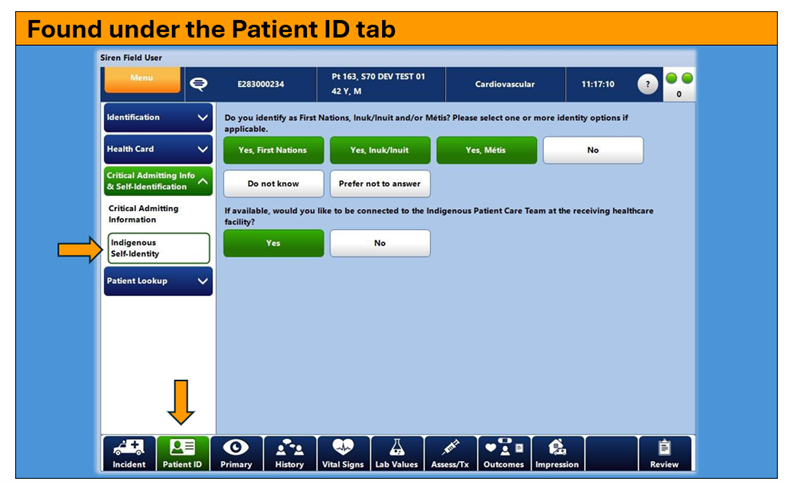
II. Siren process for completing Indigenous Self-ID section
When the Patient self identifies as Indigenous and would like to be connected with the Indigenous Care Team.
Indigenous Self-Identity: Indigenous People may self-identify in different ways, either through their families, clans, nations, or ancestral names. This diagram shows some of the many ways that Indigenous People may choose to self-identify. Some terms are traditional or cultural and other terms are legally imposed.
Please use each patient's preferred term whenever possible.
For more information, please see the Indigenous Patient Self-ID Quick Reference Guide.
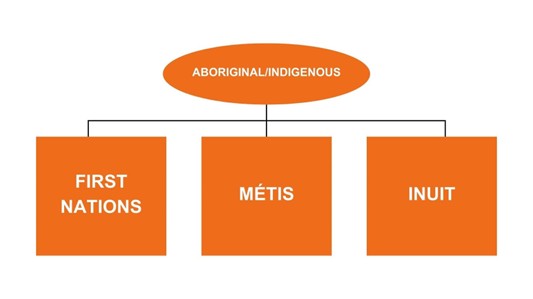
First Nations: are the original people in Canada. They are the largest and most diverse of the three groups.
First Nations speak many languages and have distinct cultures and ways of governing.
Métis: are a distinct Indigenous People with their own unique cultural, economic and social orientation. The Métis emerged post colonization as Indigenous Peoples and European fur traders engaged in the trade. Being Métis is about ancestry, language, culture and community; being of "mixed race" does not make a person Métis.
The majority of Métis live in urban centers, with Vancouver have the third highest population in Canada. Métis are not covered under the Indian Act, so Métis citizenship does not entitle Métis to health services from the federal government.
Not all Métis are registered, therefore not having Métis Nation citizenship does not change how we refer to the person or how we record their identity.
Inuit: are the Indigenous Peoples of the Arctic. Inuit also live and access healthcare in other parts of Canada, including urban areas. The Inuit language of Inuktut has five main dialects currently spoken by 2/3 of Inuit. Half of Inuit children speak Inuktut as their first language. Inuit harvest country foods such as narwhal, caribou and seal. In Inuktut, the word Inuit means "the people" and the singular of Inuit is Inuk.
Inuit Nunangat is a Canadian Inuit term that includes the land, water and ice of the Inuit homeland integral to their culture and way of life.
It is comprised of four regions:
- Inuvialuit: NWT and Yukon
- Nunavik: Northern Quebec
- Nunatsiavut: Labrador
- Nunavut